An artist-operated center located in Ford City has announced the removal of a public art installation from the exterior of its premises, citing a disagreement with its landlord.
The piece displayed the phrase “Windsor had drag queens before you existed” on a text-based billboard. Artcite asserts that the landlord claimed the message breached their lease agreement.
In a statement posted on its Facebook page Tuesday, the non-profit organization expressed its disagreement with this assertion.
In another post, it emphasized the need to move the billboard in order to maintain the artistic freedom and integrity of the Arts Council Windsor and Region’s New Voices Program.
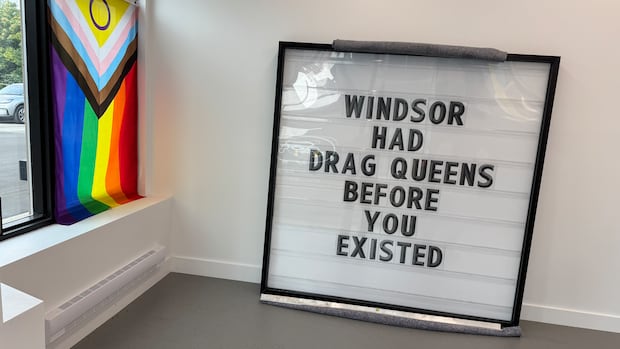
An installation on the outside of Artcite’s Ford City building was recently removed. The CBC’s Jason Viau reports.
“We are actively seeking a new location for the New Voices Billboard in Ford City, allowing participating artists to display their work as originally intended,” the organization stated.
“For the time being, the current exhibition, Windsor Had Drag Queens Before You Existed, will remain on display in Artcite’s lobby until August 18.”
‘A space for reflection, creativity, and conversation’
CBC has reached out multiple times to the building’s owner, Michael Difazio, via in-person visits, phone calls, and emails, but has not received any response.
The New Voices Billboard is a project of the arts council that highlights the work of local artists from marginalized communities, as noted in a Facebook post from the Windsor-Essex Community Foundation on June 3.
It consists of a large white board featuring interchangeable black letters, where artists can post textual messages.
Originally initiated in 2021, it was relaunched in June for a one-year period thanks to a grant from the foundation.
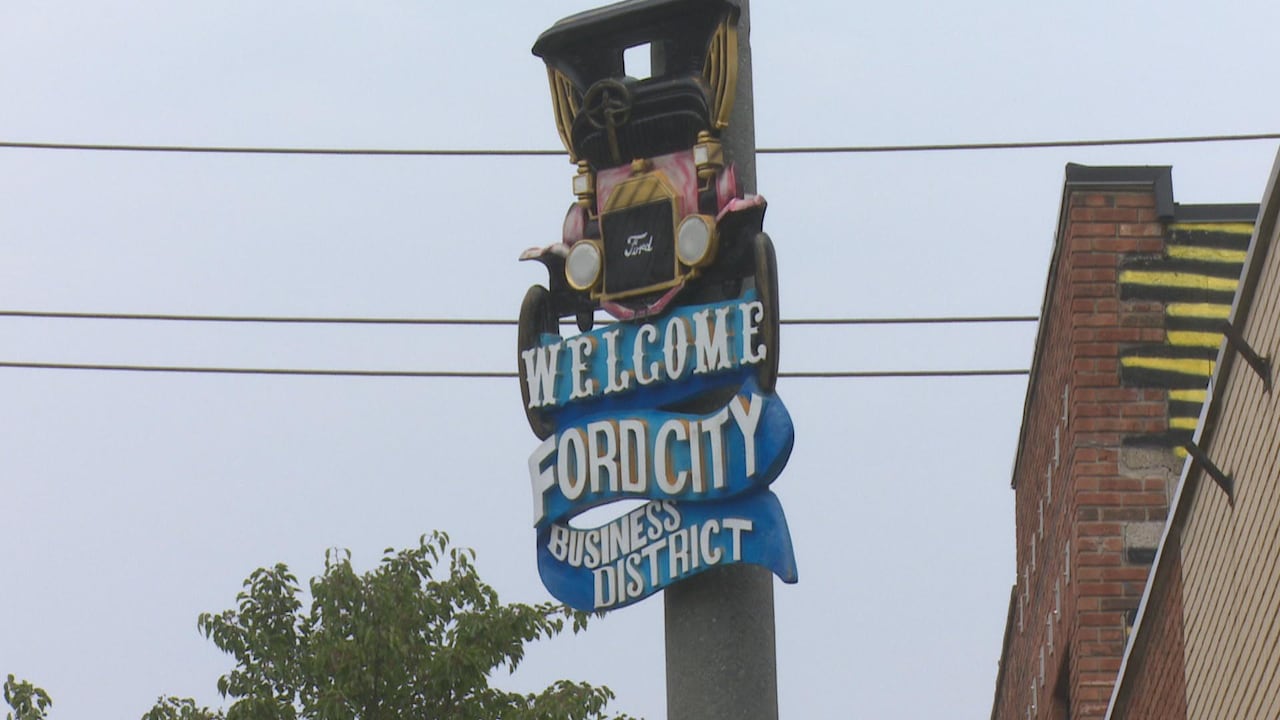
The Ford City BIA said it is actively looking for a new home for the project. (Jennifer La Grassa/CBC)
“This installation aims to transform the streetscape into a venue for reflection, creativity, and dialogue, encouraging residents to engage with various perspectives through innovative poetry and storytelling,” the foundation remarked at the time.
Artcite claims it had notified its landlord in April regarding the project’s intent and format and even provided a mock-up; according to Artcite, the landlord granted written consent to “proceed with this project.”
The organization asserts that the landlord did not voice any objections to a modification of the sign’s wording during the first exhibition, which commenced on June 24.
However, following the launch of the current exhibit, Artcite alleges that the landlord requested the removal of the text and indicated that future wording would need his prior approval.
“He subsequently claimed that Artcite had breached its lease by failing to secure approval for previous wording alterations,” they stated.
According to the non-profit, the lease does not stipulate that individual artworks, exhibition texts, or modifications require landlord approval.
Artist requests privacy
Approval is only mandated for “the tenant’s identification signage.”
There is no separate agreement that grants the landlord authority over artists, exhibitions, or individual texts, the organization noted.
Despite this, the organization decided to take down the billboard on Tuesday to avoid potential financial and legal repercussions, as mentioned in their post.
The artist responsible for the billboard, Cole Fortier, also known as Epoxy the Drag Queen, opted not to participate in an interview following the decision.
“What I can say is that my project speaks for itself, and the backlash surrounding it shows that the message behind the project is significant and necessary,” Fortier conveyed in an email to CBC.
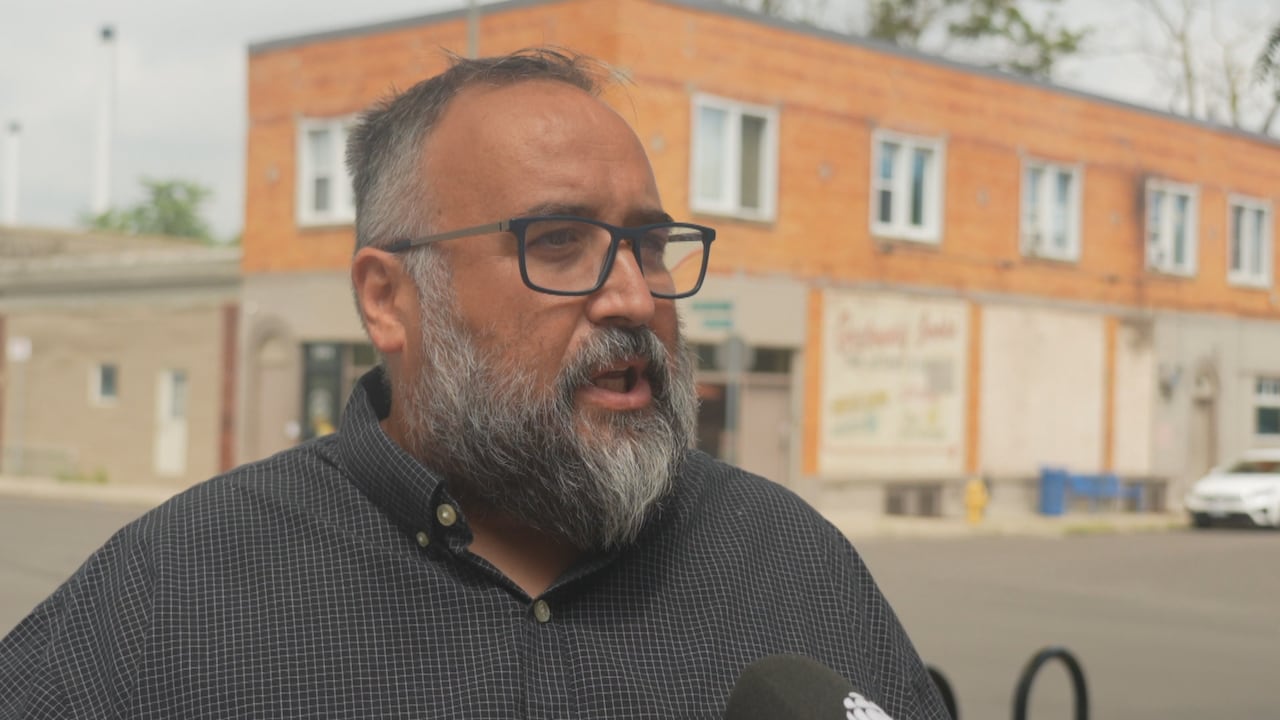
Ford City business owner Rino Bortolin stated he believes the art project has been successful in sparking conversation. (Ken Amlin/CBC)
The Ford City BIA has expressed disappointment over the removal of the installation and is actively seeking a new location for the project.
“The FCBIA aims to create a safe and inclusive neighborhood where individuals feel represented and diverse voices can be recognized,” it stated.
“We aspire for the New Voices Billboard to remain within our community. Initiatives like this inject creativity, dialogue, and varied perspectives into our public spaces, enhancing the character and vibrancy of Ford City, which boasts numerous public artworks and murals.”
Ford City business owner Rino Bortolin expressed that he finds nothing offensive about the installation, believing that the conversation should be allowed to unfold.
“That dialogue is, in fact, one of the outcomes that good art aims to achieve,” he remarked.
Bortolin believes that arts organizations should have the freedom to do whatever they are legally permitted to on their properties.

