
Alex Gibney’s nearly four-hour documentary Musk, which delves into the life of Elon Musk, the tech mogul and the wealthiest individual globally, does not present an uplifting narrative. Rather, it stands as one of the most disheartening and alarming pieces of media since An Inconvenient Truth raised awareness about the looming threat of climate change.
In contrast to An Inconvenient Truth, Gibney’s Musk seems to lack a reassuring conclusion on how humanity can escape from current predicaments. Instead, it sketches a portrayal of how Musk transitioned from an ambitious entrepreneur to a political figure who, according to Gibney, was instrumental in the erosion of USAID and even sought to establish a breeding commune in anticipation of a hypothetical civil war. This occurs before, according to the documentary, he allegedly destabilized Western democracy.
During an interview this September, prior to the film’s premiere at the Toronto International Film Festival, Gibney expressed some understanding of the bleak perspective surrounding the film. He had recently faced threats of defamation lawsuits from a similarly displeased Musk, who described Gibney as “a shill for the far left,” a “horrible human,” and simply a “douche.”
Gibney recognized the daunting length of the film: after completing their original two-hour version, Musk aligned with U.S. President Donald Trump, prompting HBO executives to advise Gibney to extend the film. They believed it warranted a more substantial runtime due to Musk’s significant influence on the future of the planet, leading to a final duration of three hours and 45 minutes.
The relationship proved to be complex. Although the documentary is set to hit North American theaters on October 16, Gibney harbored concerns at the time of the interview, as Universal, the international rights-holder, had not confirmed distribution plans outside North America due to possible political pressures.
Additionally, he mentioned that Paramount’s acquisition of HBO’s parent company, Warner, with David Ellison, who is friendly to Trump, at the helm, raised concerns in the back of his mind regarding the potential cancellation of the documentary’s streaming release.
Since that conversation, Gibney has indicated that discussions about international theatrical release are currently underway, and the documentary is anticipated to be available for streaming in early 2027, though no specific date has been announced. When audiences eventually get to see it, he hopes the reception will be less grim.
“It’s not a funeral; it’s a warning. But things are pretty dark. We’re going to be lowered into the earth if we’re not careful,” the director stated, acknowledging the overwhelming sense of dread his film tends to evoke. “You know, and the film concludes with the planet Earth exploding while Musk escapes in his spaceship. So that’s about as pessimistic as it gets.”
A question of objectivity
Initially an admirer of Musk, owning a Tesla solar panel system, Gibney noted that by the time he began working on the film seriously, he found it hard to maintain any initial goodwill towards his subject. Attempts to interview Musk directly were met with silence.
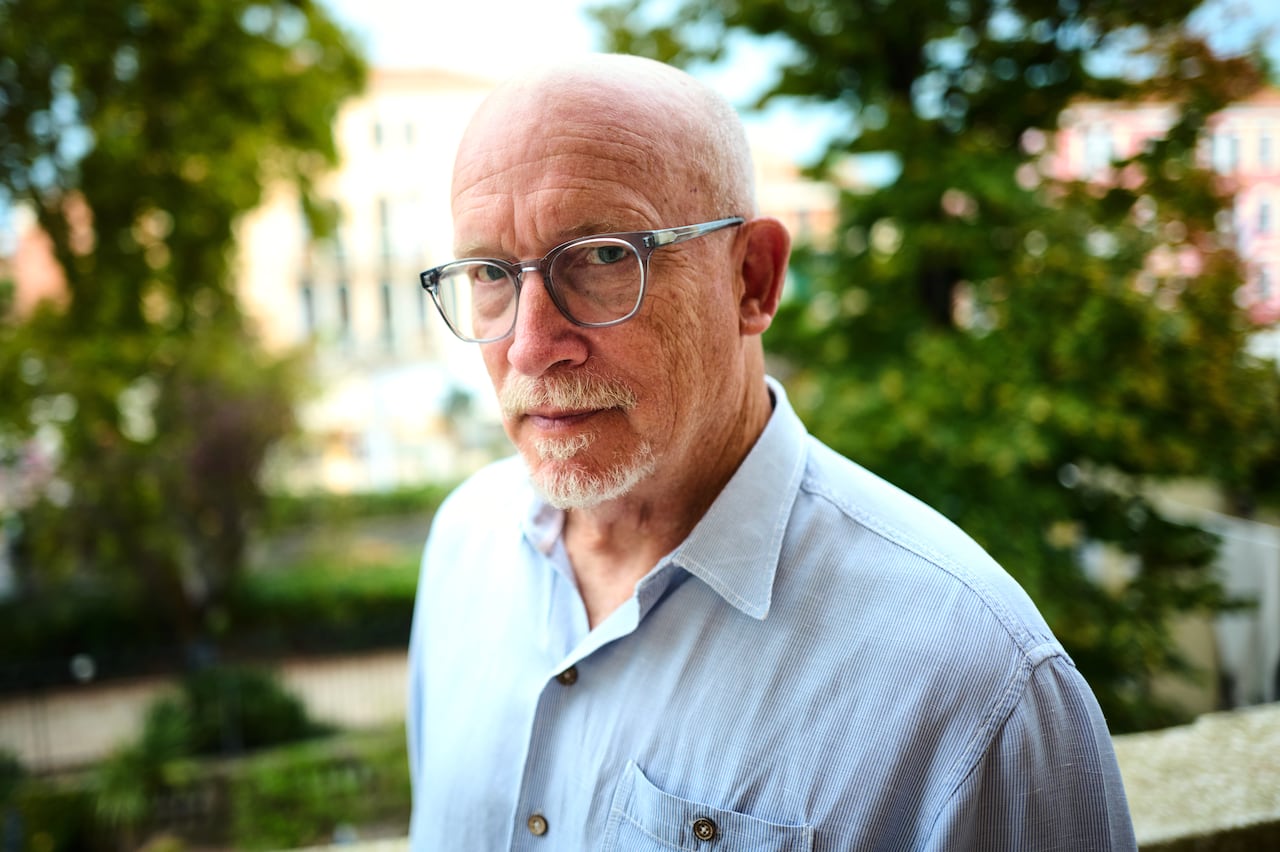
Director Alex Gibney poses for portrait photographs for the film Musk during the 83rd edition of the Venice Film Festival in Venice, Italy, in September 2026. (Scott A Garfitt/Invision/The Associated Press)
Efforts to engage with Musk’s close business associates also faced barriers, as they uniformly declined to comment without Musk’s approval. Consequently, the decision was made to allow Musk to express himself through an AI-generated avatar.
This AI avatar, utilizing Musk’s own words, narrates a significant portion of the documentary. Much of its content, including Musk’s criticisms of the documentary’s perspective, mirrors his real-life statements about the “hit piece” Gibney produced.
The result is a somewhat divided yet predominantly negative portrayal of a figure whom Gibney argues is pivotal to the decline of contemporary politics.
The documentary outlines Musk’s early background as a self-identified “founder” of PayPal and Tesla, featuring interviews with various journalists and his former spouse, Justine Musk, which depict his public image as an engineer and genius as little more than a carefully crafted marketing strategy.
“There’s a prevalent notion in modern societies that if you’re wealthy, you must be exceptionally intelligent — a genius,” Gibney asserts, encapsulating the film’s primary argument. “But perhaps you’re just cutthroat. And maybe one can be immensely rich and powerful while also being, to some degree, unhinged.”
Additionally, the film addresses Musk’s involvement with the Department of Government Efficiency (DOGE) and, according to Gibney, his role in orchestrating the dismantling of the U.S. federal government.
-
TikTok, X reportedly barring ads for documentary about Elon Musk
-
Elon Musk calls documentary about him a ‘hit piece’ after buzzy debut
The film features allegations from former MAGA influencer Ashley St. Clair, who is the mother of one of Musk’s children. She discusses cryptic messages Musk sent her before the 2024 U.S. presidential election that resulted in Trump’s re-election, which reference an “anomaly in the Matrix” created by “ten thousand lasers in space.”
When Gibney inquired if she thought that could refer to SpaceX satellites, her response was, “I don’t know where else he has lasers.”
“It’s important to note that the comments about the ‘anomaly in the Matrix’ and lasers from space did not originate from a Musk critic. They came from Elon Musk himself,” Gibney emphasized.
This comes despite a letter sent to Gibney’s Jigsaw Productions, asserting that the exchange supports a debunked conspiracy theory alleging Musk utilized his internet service, Starlink, to manipulate voting machines in crucial states.
“That seems like a valid point to include in a film,” Gibney remarked. “I don’t claim in the film that’s what he did. I merely state that it has been alleged.”
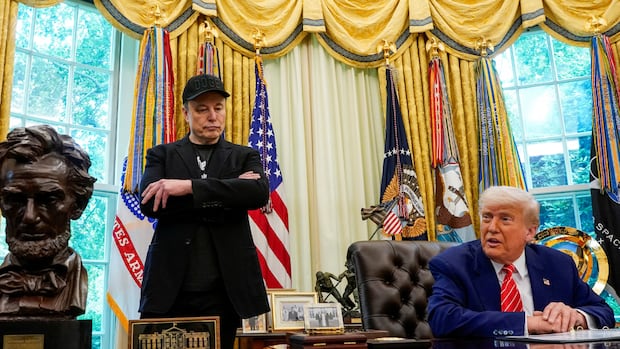
Elon Musk is leaving his special government role as a top adviser to U.S. President Donald Trump. His departure, announced Wednesday, marks the end of a turbulent chapter that included thousands of layoffs and the removal of government agencies. Musk says he still plans to act as a consultant despite his decision to step down.
When questioned further, Gibney justified the inclusion of an AI-generated avatar in a critical documentary about an advocate for AI: “We employed some AI tools, but they were directed by human input,” he explained. The intention was for it to act as a kind of “agent provocateur,” provoking a negative response towards the rise of AI by compelling viewers to engage with it.
When asked if he hopes the film might influence voters in the upcoming U.S. midterms, his answer was straightforward: “I do.”
For Gibney, Musk’s rise to power represents more than just a personal failure. When “a reckless tech billionaire effectively takes charge of the federal government and seeks to dismantle it for self-serving reasons,” he asserts, the responsibility ultimately falls on the American public.
“We are to blame. We allowed him to take control because we failed to demand accountability from our representatives,” he stated.
“You know, ‘Oh, I like my Tesla, so he must be a good guy.’ You might enjoy your Tesla. But what if he isn’t a good person, right?”

