A security flaw in a vital component of the internet’s framework was revealed this week, prompting website managers globally to rush to apply necessary corrections.
The issue was linked to the PHP programming language — a widely utilized software considered “the backbone of the internet,” as stated by Isaac Privett, a senior penetration tester at the cybersecurity firm Packetlabs based in Toronto.
This vulnerability had been present for several years, enabling malicious actors to infiltrate websites, modify them, and extract sensitive information.
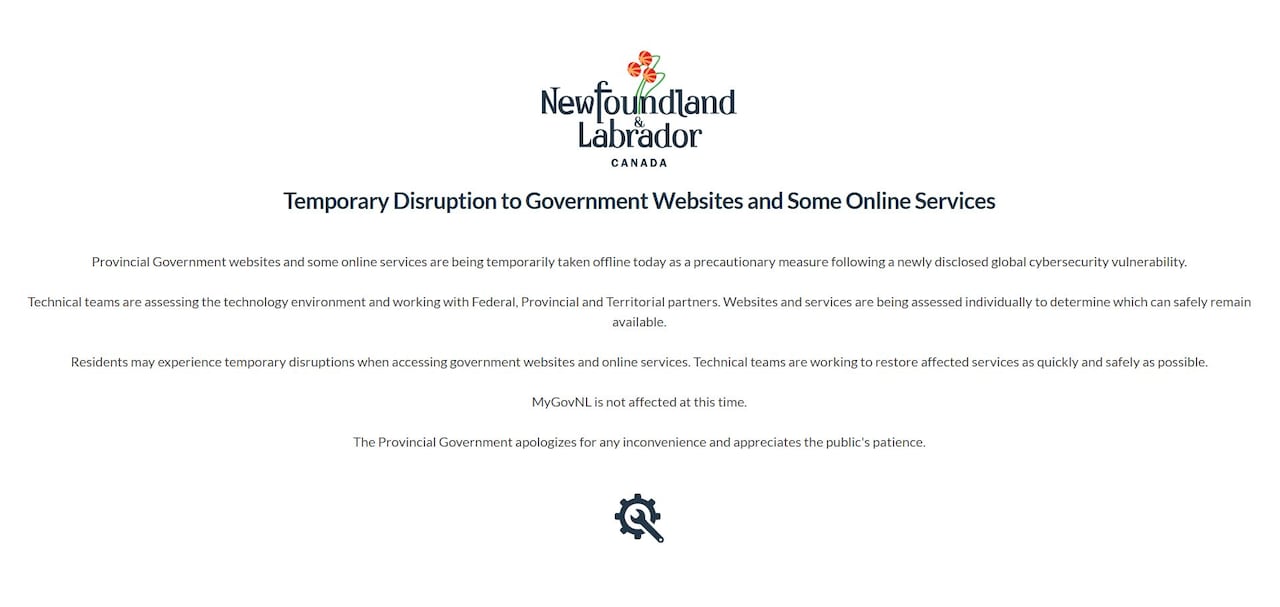
The situation forced numerous entities to take their websites offline while they worked on a fix, resulting in some sites — including those of the Canadian government — becoming inaccessible.
Here’s what you should know about PHP, how this vulnerability came to light, and the severity of the issue.
What is PHP?
PHP is an open-source programming language — meaning it can be downloaded and utilized at no cost — that is extensively used on the internet. The PHP Foundation, a non-profit organization, oversees its management with a team of volunteer board members and a few developers.
When visiting a website, various elements such as images, links, and color schemes must be correctly assembled and presented to users, explains technology analyst Carmi Levy. PHP performs this function, aggregating these components and enabling websites to function.
“PHP operates quietly in the background, ensuring that websites transition from fragmented data stored on a server to interactive sites that users can engage with on their browsers or devices,” said Levy, who is located in London, Ontario.
A security leak in the foundational PHP code that powers most of the internet has triggered a worldwide alert, forcing governments and major companies to take websites offline. Andrew Chang breaks down how advanced AI uncovered the vulnerability — and the race between defenders and hackers to secure the system.
(Photo credits: The Canadian Press, Reuters, Adobe Stock and Getty Images)
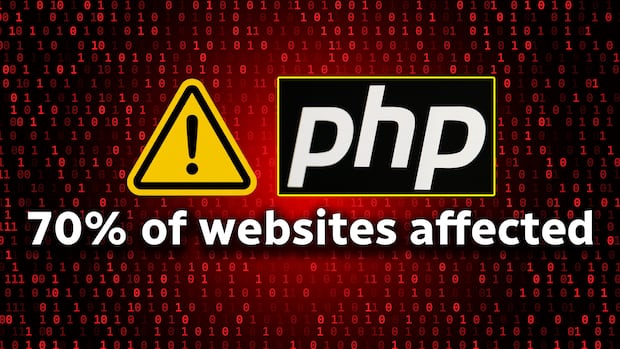
Wiz, one of the cybersecurity firms involved in detecting the problem, estimates that roughly 70% of websites rely on PHP, while the web technology tracker W3Techs suggests the proportion is 75%.
This extensive usage classifies PHP as a “foundational” technology essential for the internet’s operation, according to Levy, which is why a vulnerability in it could lead to substantial repercussions.
What is the issue, and how was it uncovered?
On Wednesday, a team of researchers from two cybersecurity firms — Calif and Wiz — published blog entries stating they had identified two vulnerabilities in PHP. These researchers had been participating in an OpenAI program aimed at detecting potential vulnerabilities across the internet, including those within PHP.
Ryan Austin, a cybersecurity researcher at Calif.io, who contributed to identifying these issues, noted he was aware of a security concern from 2004 related to PHP and utilized OpenAI’s GPT‑5.6 Sol to search the same segment of PHP’s code for additional vulnerabilities.
“A few days later, we managed to uncover something quite serious,” Austin remarked.
The PHP Foundation clarified in a Wednesday announcement that both vulnerabilities are located in “areas of PHP that nearly every request interacts with: memory management and error handling.”
Austin explained that when PHP encounters an error, it leaves behind memory details that can become corrupted, potentially providing hackers a pathway into websites.

Tech analyst Carmi Levy states that the extensive use of PHP across the internet is a significant factor in the concern over a vulnerability in it. (Submitted by Carmi Levy)
If hackers gain access, they could modify the websites — potentially inserting malware or deleting content — or access sensitive information like passwords, according to Levy.
Wiz indicated that these vulnerabilities had been present for over a decade. The PHP Foundation acknowledged that a researcher had speculated about this potential exploit in 2024, but at that time, no definitive method to execute it was discovered.
The PHP Foundation stated that the delay in addressing the issue was due to a “structural failure” stemming from resource limitations and the decision-making process of the security team.
How serious is the situation?
Levy compares it to a scenario where a leading manufacturer of door locks discovers that a master key is widely accessible.
<p"This means someone could approach your front door, use that master key, and gain entry into your home," Levy explained.
He noted that security incidents are evaluated on a scale from zero to 10 using the Common Vulnerability Scoring System. These vulnerabilities were rated at 9.2, indicating a high level of severity.

Government and corporate websites globally were taken offline after developers discovered flaws in the popular PHP code that could expose them to numerous hackers.