
As the conflict between Russia and Ukraine approaches a critical juncture, a notable intelligence mission by the U.S. to Moscow this week has highlighted a divided discussion among allies regarding Vladimir Putin’s forthcoming actions.
For several weeks, analysts have speculated that Putin has abandoned hopes that U.S. President Donald Trump could pressure Ukraine into accepting his stringent surrender demands. It is believed that Putin may conclude that the ongoing five-year war can only be resolved by escalating the conflict.
With the Russian economy deteriorating and the number of volunteers willing to join the fight in Ukraine decreasing, Putin may face several choices.
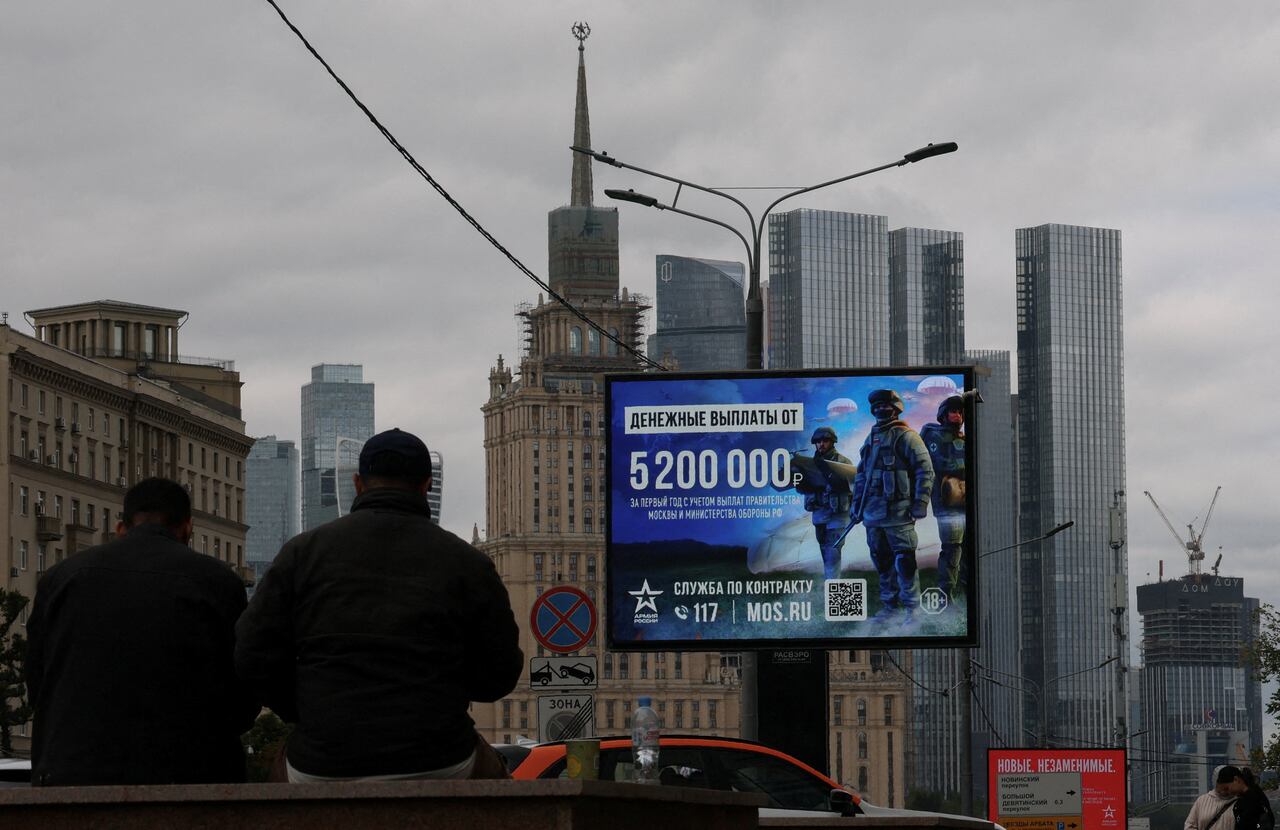
Men in downtown Moscow, Russia, view a billboard advertising military service on August 27, 2026. (Ramil Sitdikov/Reuters)
Ukrainian intelligence officials suspect he will soon launch an unpopular mass mobilization that could deploy hundreds of thousands of new conscripts into combat, aiming to overwhelm Ukraine’s stretched defenses.
Soldiers from Russia’s economically disadvantaged regions have constituted a significant portion of the combatants in Ukraine. A nationwide mobilization could involve men from the wealthier urban centers.
Military analysts on both sides of the Atlantic have cautioned that Putin may attempt to sow discord among Ukraine’s NATO supporters by orchestrating some form of provocation in Eastern Europe to fracture the alliance.
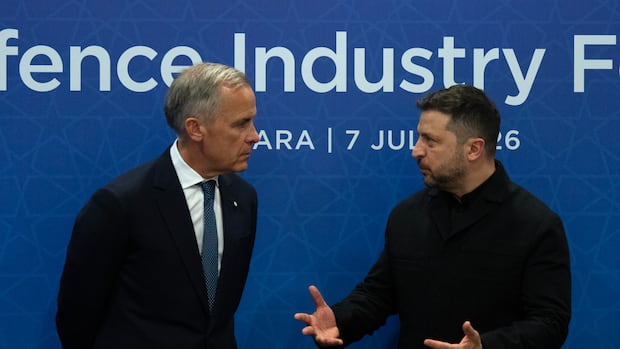
Ahead of a meeting with Ukrainian President Volodymyr Zelenskyy in Ankara, Turkey, on Tuesday, Prime Minister Mark Carney condemned Russian President Vladimir Putin’s actions in Ukraine and stated that the pressure on Russia ‘is only going to increase.’
Suspected and confirmed Russian hybrid attacks throughout Europe — including attempted assassinations, sabotage, and frequent drone incursions — have ramped up recently. However, strategists remain wary that Russia might be tempted to occupy a portion of Russian-speaking territory in a neighboring nation to test the alliance’s response.
Russian officials have also suggested this week that they could target Western arms manufacturers supplying Ukraine, particularly in the United Kingdom.
Unusual Visit
The conjecture surrounding Putin’s next steps escalated earlier this week following the unexpected visit of CIA Director John Ratcliffe to Russia.
Instead of arriving in Moscow on a private jet— the usual method for discreet diplomatic missions— Ratcliffe landed at Vnukovo airport aboard a large, highly recognizable U.S. Air Force C-17 Globemaster.
The flight’s transponder openly broadcast the course across the Atlantic.
U.S. officials seemed intent on signaling to the world that Ratcliffe’s trip to Moscow was of great importance, indicating they had a crucial message for the Russians.
“It kind of reached a point inside the administration where they said, ‘We need to read the Russians the riot act,'” remarked Glen Howard from the Saratoga Foundation, a security think-tank in Washington, D.C., focused on Ukraine.
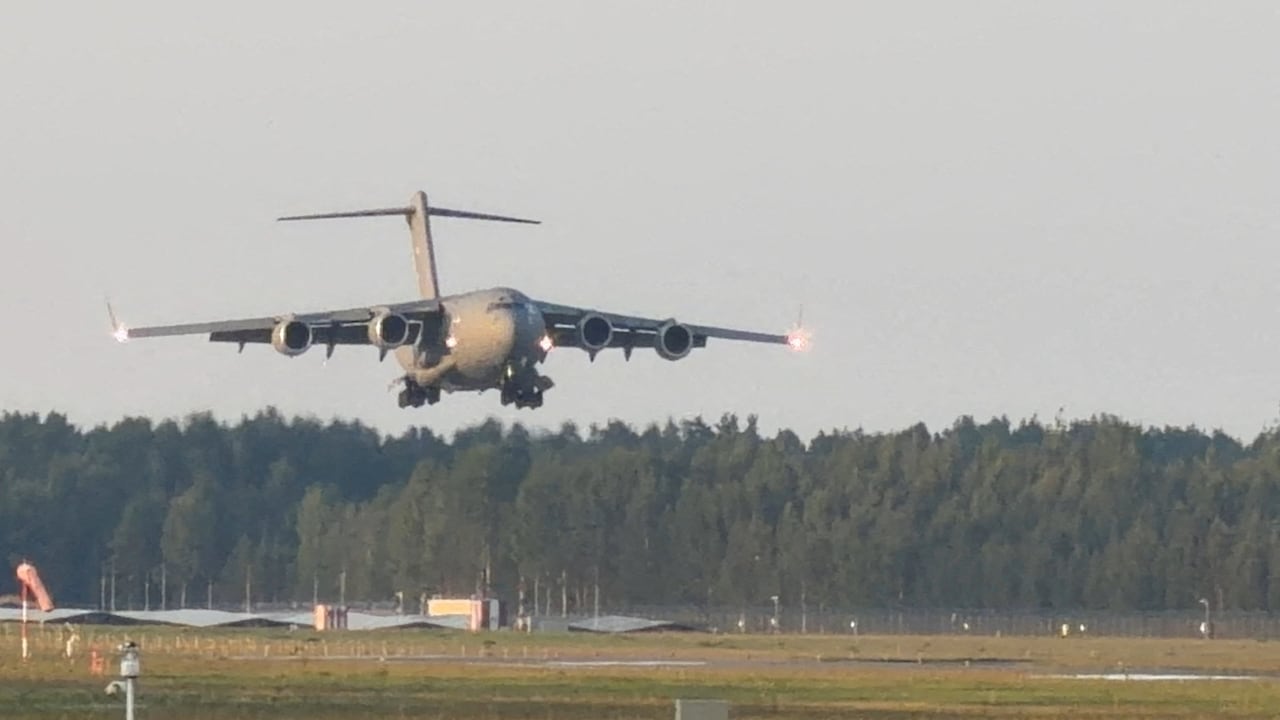
A C-17 Globemaster, thought to be transporting CIA Director John Ratcliffe, lands near Riga, Latvia, on August 25, 2026, as seen in a social media video. (AlfredSpodins/X/Reuters)
But what message was Ratcliffe attempting to send?
Initially, the Wall Street Journal indicated that the objective was a direct ultimatum to Putin: cease an escalating grey-zone campaign of hybrid sabotage against NATO’s eastern front, or face a direct response from the alliance.
Military strategists have long contemplated whether Putin might attempt to draw the U.S. or NATO directly into the war to secure a favorable resolution in Ukraine. One method could involve staging a limited attack on a small Baltic nation to assess the response to Article 5 of the NATO treaty.
However, the following day, Trump seemed to downplay this, stating he wasn’t concerned about a Russian assault on NATO, labeling Ratcliffe’s visit as “semi-routine.”
Hours later, the New York Times released a report that aligned more closely with Trump’s comments, contradicting earlier accounts. It suggested that NATO was not the primary focus of the meeting; rather, the warning was directed at Putin to end his campaign against Ukraine before Russia’s economic and military situation deteriorated further.
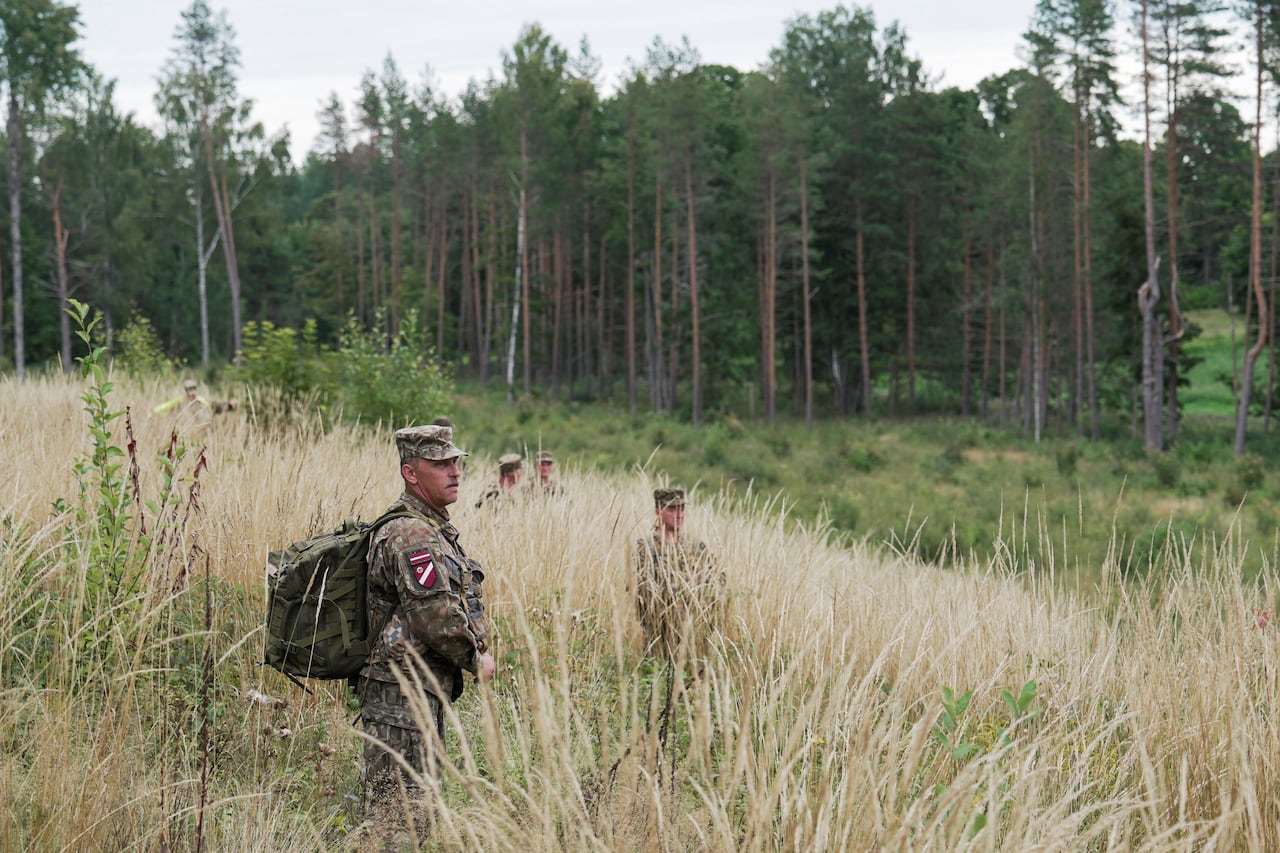
Latvian National Guard servicemen search for debris from an intercepted drone in Rugaji, Latvia, on August 14, 2026. (Janis Laizans/Reuters)
Canada’s Role
Canada’s largest overseas military presence is in the Baltics, with over 2,000 soldiers stationed in Latvia to deter any potential Russian aggression.
Canadian military and security expert Wesley Wark doubts that Putin aims to provoke NATO directly, even with the U.S. facing political and military challenges due to the ongoing conflict in Iran.
“I think fears regarding Article 5 are exaggerated,” Wark commented to CBC News via email. “My primary assumption is that Ratcliffe’s trip to Moscow was to communicate the seriousness with which the U.S. intends to impose economic sanctions against Iran, along with a warning to Russia not to interfere.”
Russia is a significant military ally of Iran, and Putin’s government may be providing targeting data to assist with strikes on U.S. military installations in the Persian Gulf.
The initial response to Ratcliffe’s visit from nations like Latvia also downplayed the possibility of a NATO confrontation. The foreign minister of Latvia tweeted that “Latvia’s threat assessment remains unchanged.”
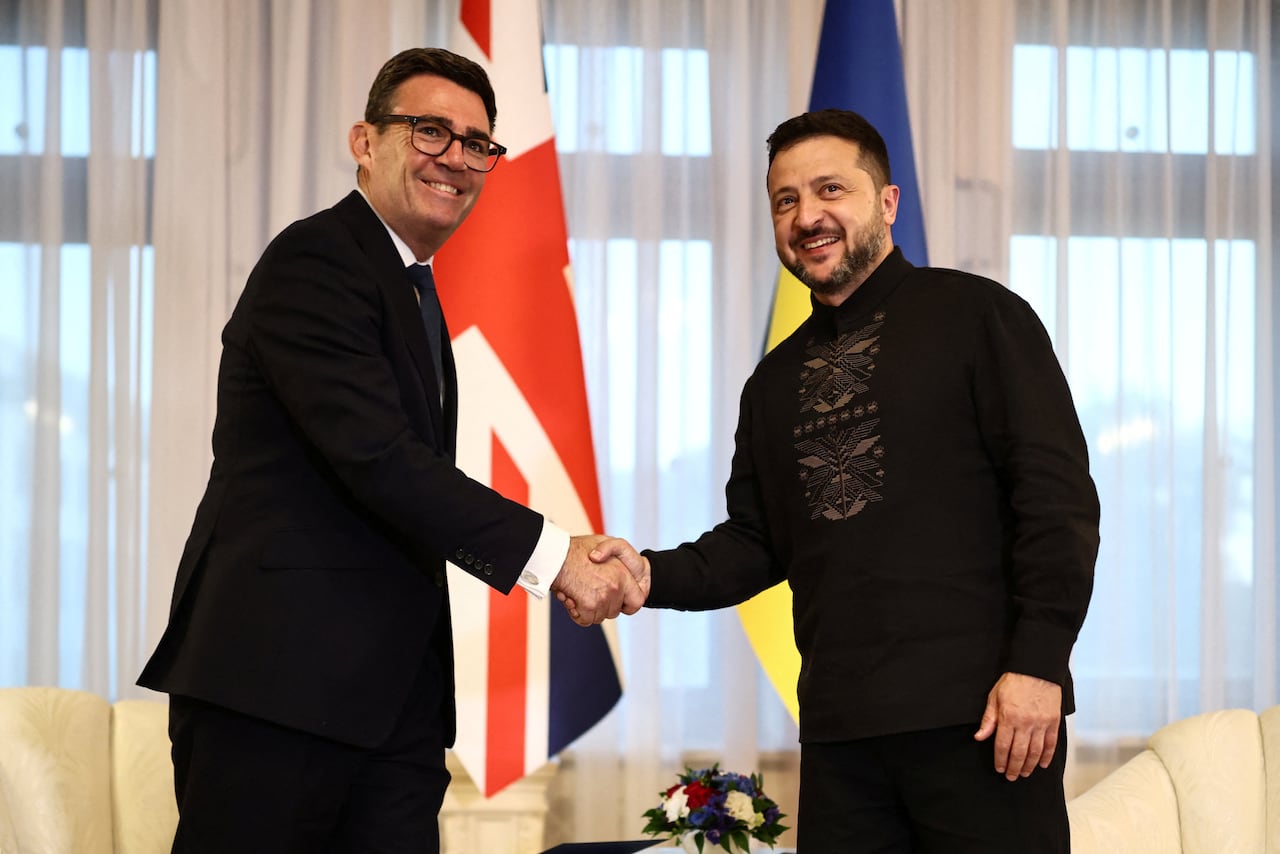
Ukraine’s President Volodymyr Zelenskyy and British Prime Minister Andy Burnham greet each other before their meeting at Horodetskyi House in Kyiv, Ukraine, on August 24, 2026. (Henry Nicholls/Reuters)
Conversely, in Britain— where Putin’s agents have notoriously conducted previous attacks, including the lethal Novichok incident in Salisbury in 2018— intelligence agencies have cautioned that critical sectors in defense should remain vigilant.
On Wednesday, Russian foreign ministry spokesperson Maria Zakharova issued stark warnings, stating that Russia could target sites both in the U.K. and abroad if the British government did not withdraw its support for Ukraine.
During his recent visit to Kyiv, Prime Minister Andy Burnham declared that he would provide Ukrainians with designs to create their own long-range missiles capable of striking deep within Russia.
Assault on Ukraine
Ukrainian officials seem convinced that the potential Russian threats against NATO, the U.K., and other European targets are merely distractions, asserting that when Putin escalates, the focus will predominantly be on Ukraine.
“I believe Putin perceives a window of opportunity,” stated Yuriy Boyechko, head of the U.S.-based Hope for Ukraine, a humanitarian organization delivering emergency supplies to the nation in the wake of Russian attacks.
“I think Putin is planning to inflict suffering and despair on the Ukrainian populace this winter due to energy shortages and food scarcity… leading them to turn against their government.”
Although Putin’s strategies are expected to cause significant hardship for Ukraine in the upcoming months, he asserts that it will not diminish the nation’s resolve.
“Historically, none of his strategies have succeeded. Therefore, I remain optimistic about that.”
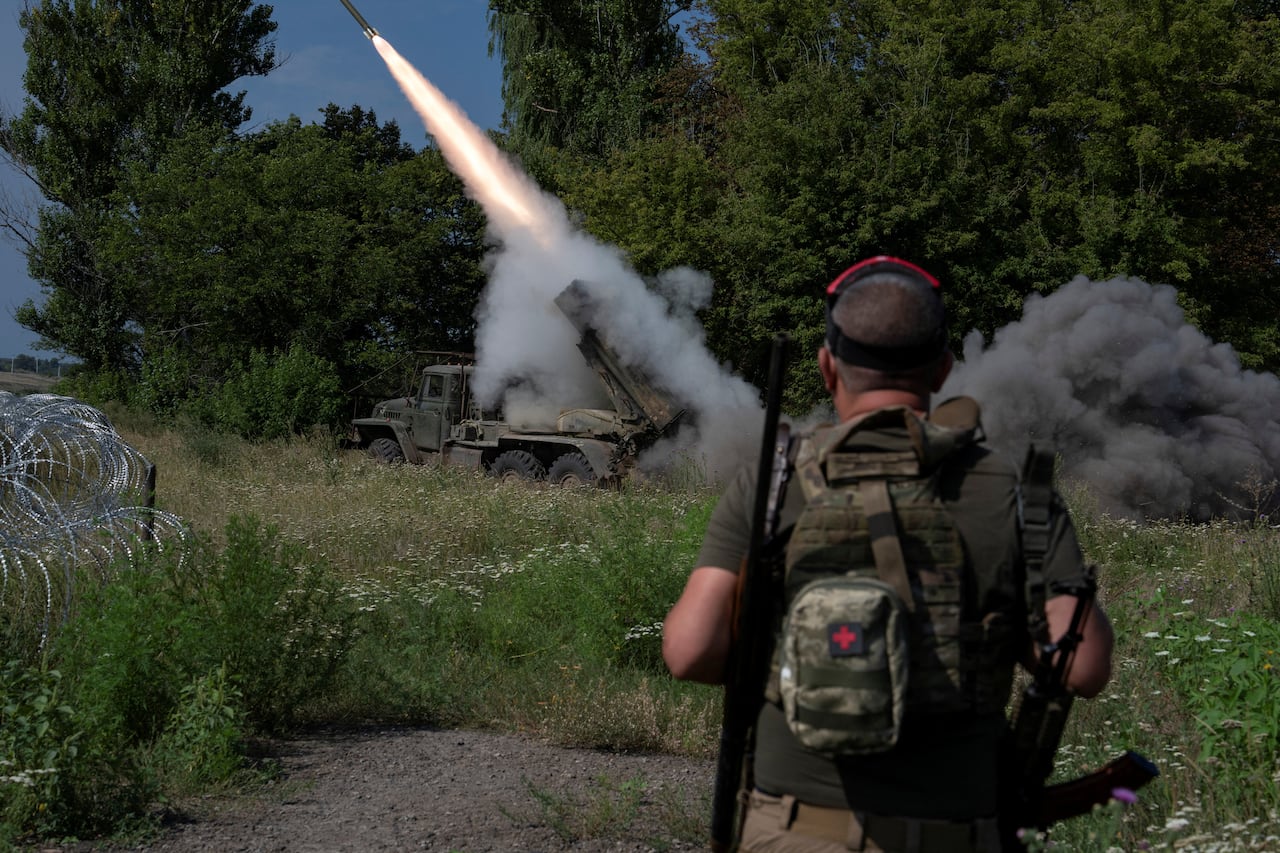
Servicemen of the 93rd Kholodnyi Yar Separate Mechanized Brigade of the Ukrainian Armed Forces launch a BM-21 Grad multiple rocket system at Russian forces near Kramatorsk, Ukraine, on August 4, 2026. (Iryna Rybakova/Press Service of the 93rd Kholodnyi Yar Separate Mechanized Brigade of the Ukrainian Armed Forces)
The intensity and frequency of missile strikes on Kyiv and other urban areas have sharply increased recently, with as many as 800 Russian drones being deployed in one night.
The lack of interceptor missiles, like U.S.-made Patriots, has left cities vulnerable and resulted in rising civilian casualties.
Boyechko believes that as Ukrainian cities come under siege, Putin will leverage his newly mobilized recruits to attempt to breach the country’s defenses in the south.
“His expectation is that these 600,000 new troops will break through the front lines and seize territory. He is not merely aiming for Donetsk, Luhansk, or Zaporizhzhia — he intends to advance all the way to Kyiv.”
Mobilization Risks
Putin reportedly anticipated that the invasion he initiated in February 2022 would conclude within days and that Kyiv would capitulate swiftly. Instead, Western sources assert that Russia has incurred casualties amounting to 1.4 million, including those killed, wounded, or missing.
A mass mobilization poses risks for Putin as well, according to Howard from Saratoga. It is likely to be extremely unpopular and could trigger a new brain drain from the nation. Additionally, civilian industries and agriculture may lose essential workers needed to sustain supply chains and support Russia’s wartime economy.
“He may opt to gradually build up the forces,” Howard suggested.
Regardless of whether Ratcliffe’s recent trip was aimed at reinforcing NATO, safeguarding the Baltics, or isolating Iran, the harsh reality on the ground indicates that Ukraine will face the immediate consequences of whatever course Putin decides to take.

