
Since 1971, Ken Erickson has been an avid hunter in Saskatchewan. One of the primary factors that led him to cease hunting certain species was chronic wasting disease.
With the provincial program concluding, other hunters are contemplating a similar decision.
The Saskatchewan government has chosen to discontinue its chronic wasting disease testing initiative after several years, attributing the decision to low participation rates among hunters. This disease impacts the brains and nervous systems of cervids like deer, elk, and moose.
Erickson expressed that although there have been no documented instances of the disease affecting humans, he has concerns for his wife, who has an compromised immune system, and is unwilling to jeopardize his family’s well-being.
“I simply don’t want to introduce that into my home. I’m not willing to take those risks,” he stated.
Originally from Thunder Bay, Ontario, Erickson began hunting at the young age of eight, becoming the first in his family to take up the sport.
After relocating to Regina in the 1970s, he developed extensive hunting knowledge in the prairies. He has contributed writings to assist fellow hunters and has served as a guide in northern Saskatchewan and northern Alberta.

Erickson, a Regina resident since 1971, is cautious about chronic wasting disease. (Submitted by Ken Erickson)
Currently, Erickson mainly hunts birds. He notes that as he has aged, managing larger game independently has become increasingly challenging. However, he would consider hunting other species if CWD were not a concern.
“I would love to hunt deer again,” he remarked. “If this were purely a science-based decision, I would find it more agreeable. However, I believe it is more politically motivated.”
Others have voiced their discontent with the province’s decision as well.
Darrell Crabbe, executive director of the Saskatchewan Wildlife Federation, states that the testing program was crucial for the community. For many hunters, including himself, it provided a safety measure to ensure the meat was safe for consumption.

The province has stated that environment ministry personnel will continue to observe wildlife health and population through alternative methods. (CBC News)
“It’s one thing for me, but certainly not for my grandchildren, children, or friends,” Crabbe shared regarding the risks involved.
According to the provincial government, environment ministry personnel will keep monitoring wildlife health and population through other means.
Since the outset of data collection, the disease has been detected in 63 out of 83 wildlife zones in Saskatchewan.
Mandatory testing was required in zones 43, 47, 49, 50, 53, and 55-69. The government announced that samples from these mandatory testing zones submitted by October 31 will still be processed.
However, samples from voluntary submission zones will not undergo testing.
Crabbe mentioned that the wildlife federation center in Moose Jaw received samples year-round, although some concerns were raised regarding the program’s logistics and effectiveness.
“Often, there are delays of several weeks before receiving a response,” he noted.

Ryan Brook, a professor in the department of animal and poultry science at the University of Saskatchewan, discusses the province’s decision to terminate its Chronic Wasting Disease testing program.
“We had hoped that this issue would be addressed and resolved more quickly.”
Ryan Brook, a professor in the department of animal and poultry science at the University of Saskatchewan, conveyed his surprise at the program’s termination, stating that while the program faced challenges, it should not have been canceled.
“You don’t discontinue a program due to challenges; you find solutions to keep it operational,” Brook asserted.
“This information is crucial.”
He indicated that there was no prior consultation regarding the consequences of halting the program.
“Hunters are stunned. They claim that none of the hunting organizations were consulted. This decision came out of nowhere, right in the middle of the deer-hunting season.”
Erickson is concerned that hunters may start abandoning carcasses, which could heighten the risk of disease transmission. He also fears that younger animals might be disproportionately hunted, as there is a misconception that they are less likely to carry the disease.
The potential consequences
Crabbe noted that 30 percent of revenue from all hunting, fishing, and trapping licenses sold by the Saskatchewan government is allocated to the Fish and Wildlife Development Fund, which spends approximately $300,000 to $450,000 annually on the chronic wasting disease program.
As of Friday morning, he had received calls from some hunters expressing their decision to quit hunting altogether following the announcement.
“I’m having many of those discussions today, with hunters saying that since they will not be permitted to test their harvested animals, it’s time for them to stop hunting.”
-
Saskatchewan hunters take issue with plan to end chronic wasting disease testing
-
Hunting programs aim to get more Indigenous youth on the land this season
Crabbe emphasized that the financial implications of this decision might have been underestimated.
“Ultimately, the financial losses will be far greater than the minimal investment they were making in the chronic wasting disease program.”
Brook stated that the government must address this issue seriously and take action beyond mere data collection, such as prohibiting baiting and tackling transmission concerns.
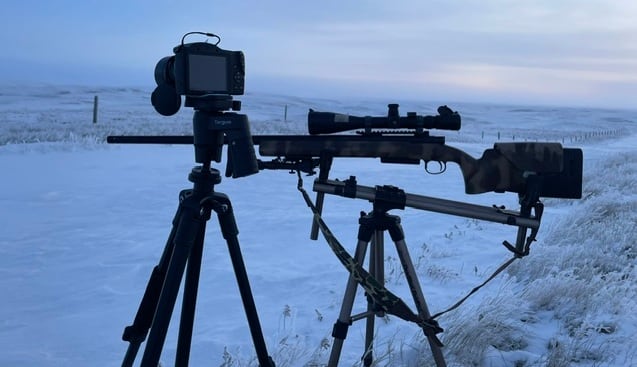
Ryan Brook noted that there was no consultation regarding the impact of discontinuing the program. (Submitted by Ken Erickson)
Crabbe added that the hunting community is urging the government to reinstate the program and suggested the establishment of a wildlife advisory committee to enhance coordination for 2027.
“I’m disappointed. The appropriate action would be to confront the issue,” Erickson stated. “I still wish to hunt in the area.”

