
The haunting call of the common loon is a sound that heralds the arrival of summer evenings, echoing across tranquil wetlands and serene lakes throughout Canada.
However, recent research indicates that the common loon may be becoming less prevalent, as significant declines have been observed across North America, particularly affecting populations in the Prairie and Atlantic regions.
Matthew Fuirst, an ecologist at Birds Canada and co-author of a study released on Thursday in the journal FACETS, expressed concern, stating, “The magnitude of this decline is what is most alarming.”
Canada houses approximately 94 percent of the world’s population of common loons, with an estimated 254,000 breeding pairs (around half a million individual birds) that migrate north every spring to raise their young.
This emblematic species, often depicted on Canadian currency, has previously faced various threats, including DDT, lead fishing tackle, and mercury contamination.
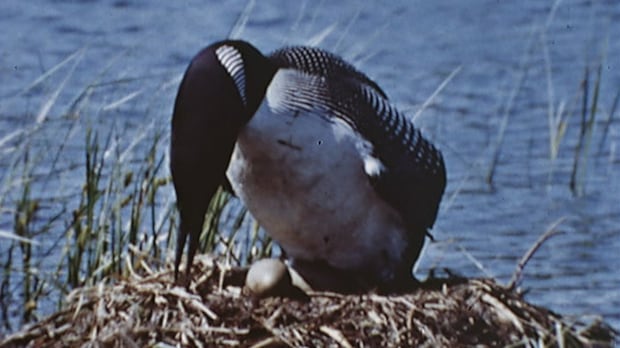
Former CBC reporter Howard Sommerville examines how DDT impacted loon eggs in this 1971 CBC archival footage.
The research team, consisting of nearly 20 collaborators from both Canada and the U.S., attributes climate change to one of the many potential causes for the decline in loon chicks.
The study evaluates loon breeding data collected from 3,421 lakes over the past 30 years, with half of this information sourced from thousands of volunteer observations through the long-standing citizen science initiative, the Canadian Lakes Loon Survey.
Throughout the study period, researchers noted “significant declines” in the number of observed chicks in most regions.
The team assessed nearly 46,000 breeding pairs of loons across specific lakes where eggs or newly hatched chicks were recorded, but where no chicks older than six weeks were noted. This benchmark was established to define the productivity rate of loon chicks.
The findings indicate an average 40 percent reduction in loon chick productivity across 10 of the 12 study areas, including regions in British Columbia and Ontario, over the past three decades.
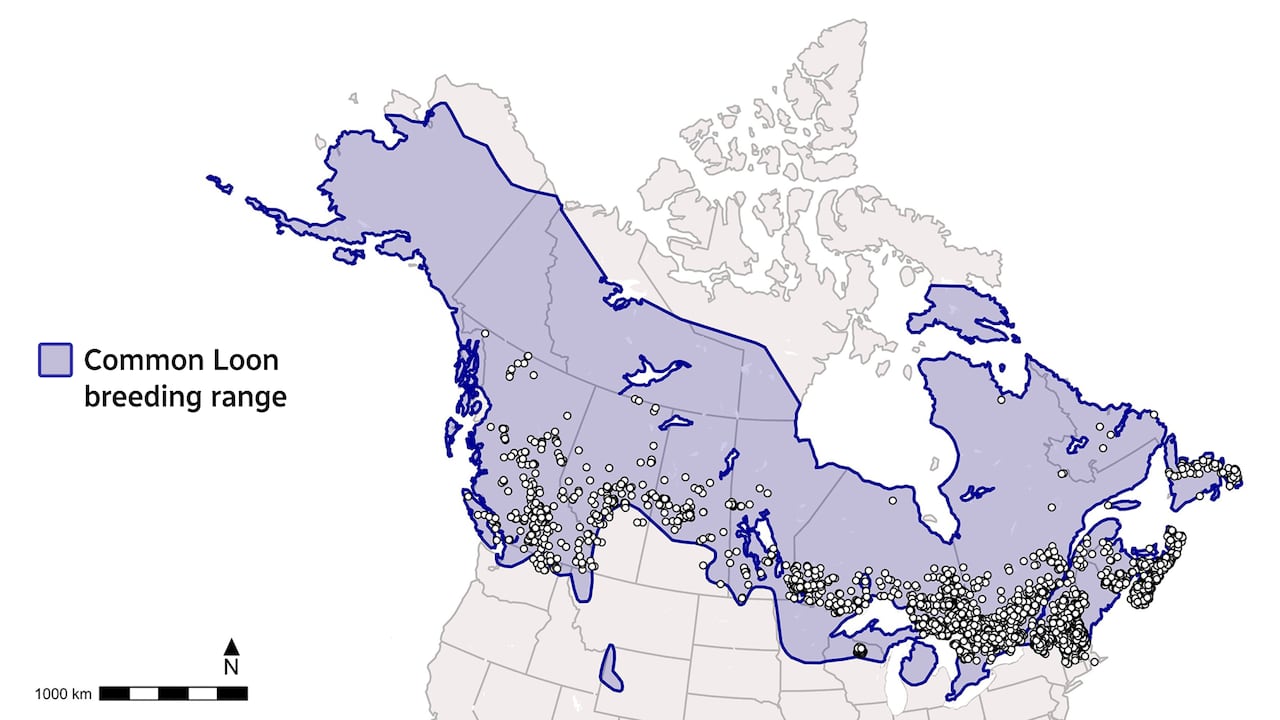
A range map of the common loon featured in the recent FACETS journal article highlighting declines in North America. (FACETS journal)
In Alberta, Saskatchewan, and Manitoba, loon chick productivity dropped even more sharply, plummeting by 65 percent since the early 1990s. Meanwhile, researchers reported a staggering 74 percent decrease along Canada’s East Coast.
The only areas where chick productivity appeared stable were Quebec and Maine.
The researchers emphasized that while the chick population isn’t the sole indicator of overall population health, the long-term declines may “indicate impending population drops” in the Prairie regions, Ontario, Atlantic Canada, and in New York, Massachusetts, and New Hampshire.
Nicola Koper, dean of the Faculty of Environment at the University of Northern British Columbia, commented on the study, stating, “The design of this research is robust, and frankly, I find the results alarming.” Koper was not involved in the study but has authored the book Best Places to Bird in the Prairies and previously served as a conservation biology professor at the University of Manitoba.
Koper noted that the scale of these losses is concerning, especially given that they have occurred over a relatively short span of three decades.
“Some readers may be in their 30s, and as they reflect on their childhood memories, they might recall seeing more loons with chicks, which is likely accurate,” Koper remarked.
Climate change as a contributing factor
Fuirst noted that the reasons for the declines may differ by region, and this is an area that the team is currently investigating.
However, it is clear that human activity is a driving force behind these losses.
Fuirst explained, “Human development along shorelines and environmental contaminants associated with climate change pose additional threats that we are witnessing.”
“As climate change alters weather patterns, acidic rainfall increases lake acidity, which in turn diminishes the availability of fish for loons.”
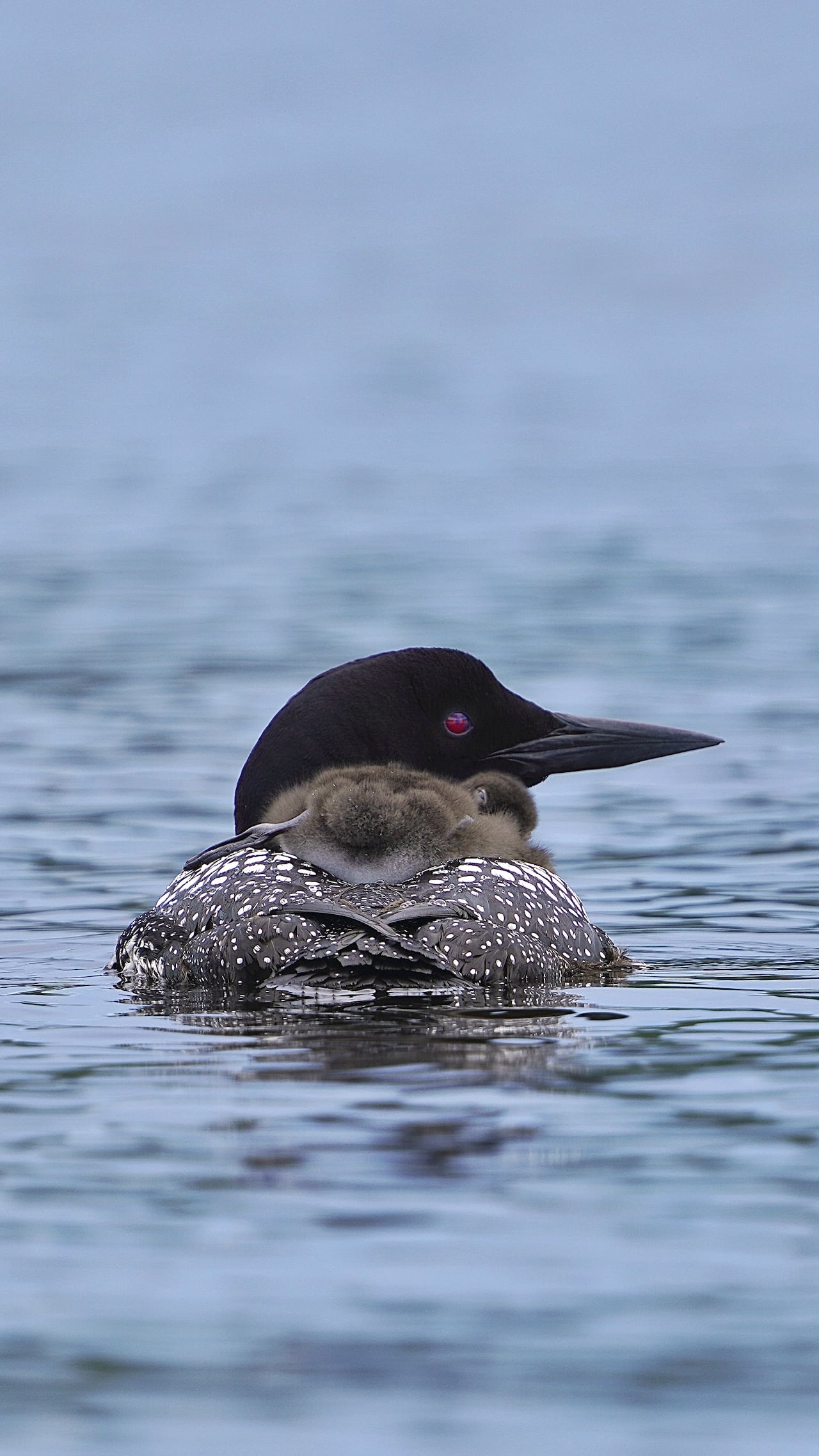
A baby common loon rests on its parent’s back in northwestern Ontario in July 2026. (Bryce Hoye/CBC)
The warmer temperatures linked to climate change have also resulted in increased rainfall and storm occurrences within loon habitats.
These conditions can lead to the destruction of low-lying nests or the drowning of eggs during flooding caused by rising waters or turbulent wave action, Koper noted.
Additionally, recent studies in the U.S. Midwest have drawn connections between deteriorating loon health and decreased water clarity, which may stem from increased sediment runoff into lakes due to more frequent rainfall.
This decrease in clarity makes it challenging for loons to spot and catch their prey, such as minnows and crayfish, Fuirst explained.
“It creates a domino effect stemming from climate change, ultimately impacting water quality,” he added.
The study combined data from Alberta, Saskatchewan, and Manitoba into one Prairie category due to insufficient data to analyze loon populations in each province independently.
Koper indicated that this may reflect the inaccessibility of many lakes in the Prairie provinces to volunteers or their relative sparsity of population.
Fuirst recommended that anglers choose lead-free, non-toxic fishing gear, boaters avoid disturbing loons, and cottagers work to maintain natural shorelines.
“Individuals can take various steps to help protect the lakes and the loons that depend on them,” he stated.
Koper urged those alarmed by these findings to participate in citizen science initiatives like the Canadian Lakes Loon Survey and advocate to politicians about the significance of climate change and its effects on wildlife and human life.

