
Conservative Leader Pierre Poilievre is urging Prime Minister Mark Carney to reconvene Parliament to provide clarity on the U.S. trade agreement that he has declined, as well as to explain how his plans will impact Canadians.
In a letter sent to Carney on Sunday, Poilievre emphasized the necessity for the prime minister to disclose the text of the agreement, stating that “Canadians need to see it in order to evaluate the options available.”
He further expressed that Canadians should understand the financial implications of Carney’s trade and economic strategies, particularly concerning the increase in prices for groceries, fuel, and other essentials.
Additionally, Poilievre inquired about the measures Carney intends to implement to safeguard jobs in the steel, aluminum, lumber, and automotive sectors that are at risk due to tariffs.
On Friday, Carney halted trade negotiations with the United States, accusing the U.S. administration of imposing conditions that limited Canada’s capacity to engage in agreements with other nations. He also indicated he would impose retaliatory tariffs in response to new U.S. tariffs that took effect on Saturday.
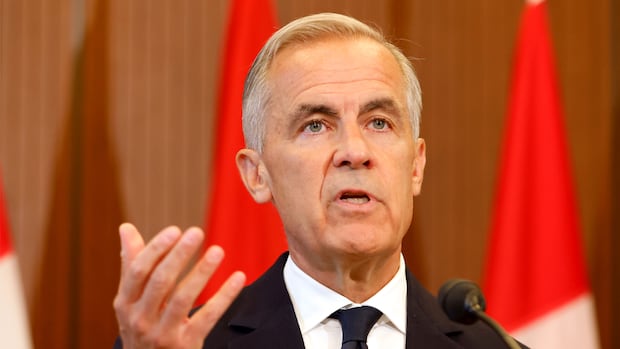
Poilievre stated in his correspondence that it is Parliament’s role to hold the government accountable, a responsibility that has never been more urgent.
“We must prioritize the national interest. The inability to secure a lasting trade agreement, coupled with rising tariffs, now poses a risk of significant economic hardship on top of a decade marked by increasing costs and stagnant economic growth in Canada,” Poilievre remarked.
“In a crisis that shapes the future of our citizens and our nation, Conservatives are prepared to return to Parliament to respond with the urgency demanded by our populace and to prioritize Canada.”
Many of the concerns highlighted in Poilievre’s letter resonate with those expressed on Sunday by Shuvaloy Majumdar, who critiques Canada-U.S. relations. He pointed out that while his party supports the government’s choice to reject the agreement, Parliament lacks information about the discussions that occurred.
Majumdar clarified that he is not seeking “negotiating secrets” but rather information that is already known to both the Canadian and U.S. authorities.
-
Carney says trade deal became untenable when U.S. ‘asked too much and offered too little’
-
Analysis
Mark Carney doesn’t stop the United States from driving negotiations over a cliff
Poilievre asserted that transparency is crucial, claiming Carney misled Canadians regarding the agreement that was eventually made to open the Gordie Howe Bridge, with the truth only coming to light after Canadians reviewed the deal.
“Canadians elect Parliament to advocate for their interests and tackle difficult questions. These questions cannot be delayed any longer,” he stated in his letter.
Details of a ‘bad deal’
The U.S. imposed new tariffs of 50 percent on billions of dollars’ worth of Canadian exports on Saturday. These tariffs target $28 billion in Canadian products, including hockey sticks, honey, essential oils, and dairy items.
In response, Carney announced that retaliatory tariffs will be imposed on the U.S. starting September 8, after Canada withdrew from what he described as a “bad deal.”
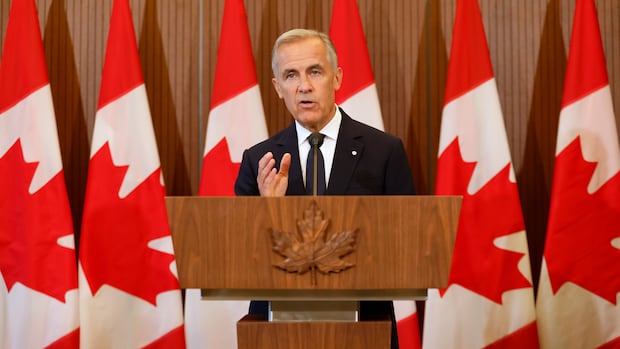
Prime Minister Mark Carney explained why the government chose not to sign a trade deal with American counterparts as U.S. President Donald Trump’s 50 per cent tariffs on almost $30 billion of Canadian goods are in effect. ‘We were not prepared to compromise Canada’s sovereignty or undermine our key industries,’ Carney said.
In a post on his Truth Social account early Sunday, U.S. President Donald Trump mocked Canada as if it were simply another U.S. state, stating, “Canada wants the benefits of being a state, without being one.”
On Sunday, other Canadian opposition parties did not explicitly demand the public release of details regarding the rejected deal, but they did support the idea of the government informing party leaders or MPs about the developments in the trade discussions.
On Saturday, Carney accused the U.S. administration of implementing measures in the final hours of negotiations that limited Canada’s ability to forge agreements with other nations.
He further noted that the U.S. introduced terms towards the end of discussions that restricted Canada’s ability to protect its language and cultural identity.
Additionally, he mentioned that while the U.S. proposed to reduce tariffs on automobiles in exchange for other concessions, the offer did not include medium and heavy trucks.

