
The latest surge of measles infections in Manitoba has decreased, yet specialists caution that the province remains far from achieving herd immunity against the virus, suggesting that the number of cases may rise again.
Dr. Davinder Singh, a medical officer of health involved with Manitoba’s immunization initiative, stated in an interview on Tuesday, “This could recur and is expected to recur” without improved vaccination rates.
In July, two confirmed cases of the highly infectious disease were reported, leading to an infection count that has not been seen since March 2025.
For a period of 3½ weeks in July, Manitoba Public Health reported no new infections. Singh noted that this is the longest interval without a recorded case since the winter of 2024-25.
“This is significant as it indicates that, despite ongoing transmission, the occurrence is much lower than before,” he remarked.
The outbreak in the province peaked at 177 confirmed cases in February due to high transmission rates during the winter months.
Since then, the number of reported infections has consistently declined, dropping to 49 cases in May and just eight in June.
“The numbers have significantly decreased, and while we may see an uptick in the fall, it is likely to be much lower than what we have already endured,” Singh stated.
Brandon Mayor Jeff Fawcett mentioned that since the peak of the outbreak, measles cases have diminished to the extent that there have been no concerns raised during a horse show event in the city this month, which attracted hundreds of visitors.
“Nobody is discussing it,” Fawcett told CBC in an interview on Tuesday.
He described this as a “huge change” compared to a few months ago when fears surrounded the Royal Manitoba Winter Fair after Manitoba Ag Days, an indoor agricultural event, caused a surge in measles cases.
Fawcett stated that things have returned to normalcy as they were prior to the outbreak.
“This is something we had not been concerned about for a generation.”
Not eradicated: microbiologist
According to Singh, many of those unprotected against measles at the outbreak’s onset have since contracted the virus, resulting in increased immunity among the population, thus contributing to the decline in cases.
“We are probably at a level comparable to if we had achieved high vaccination rates,” he noted.
However, Singh also attributed the decline to increased outdoor activities during the summer.
Dr. Philippe Lagacé-Wiens, a medical microbiologist and physician at St. Boniface Hospital, remarked that while Manitoba is experiencing the tail end of a measles infection wave, “that doesn’t imply it’s gone forever.”
The measles virus tends to follow a seasonal pattern, with higher infection rates during colder months.
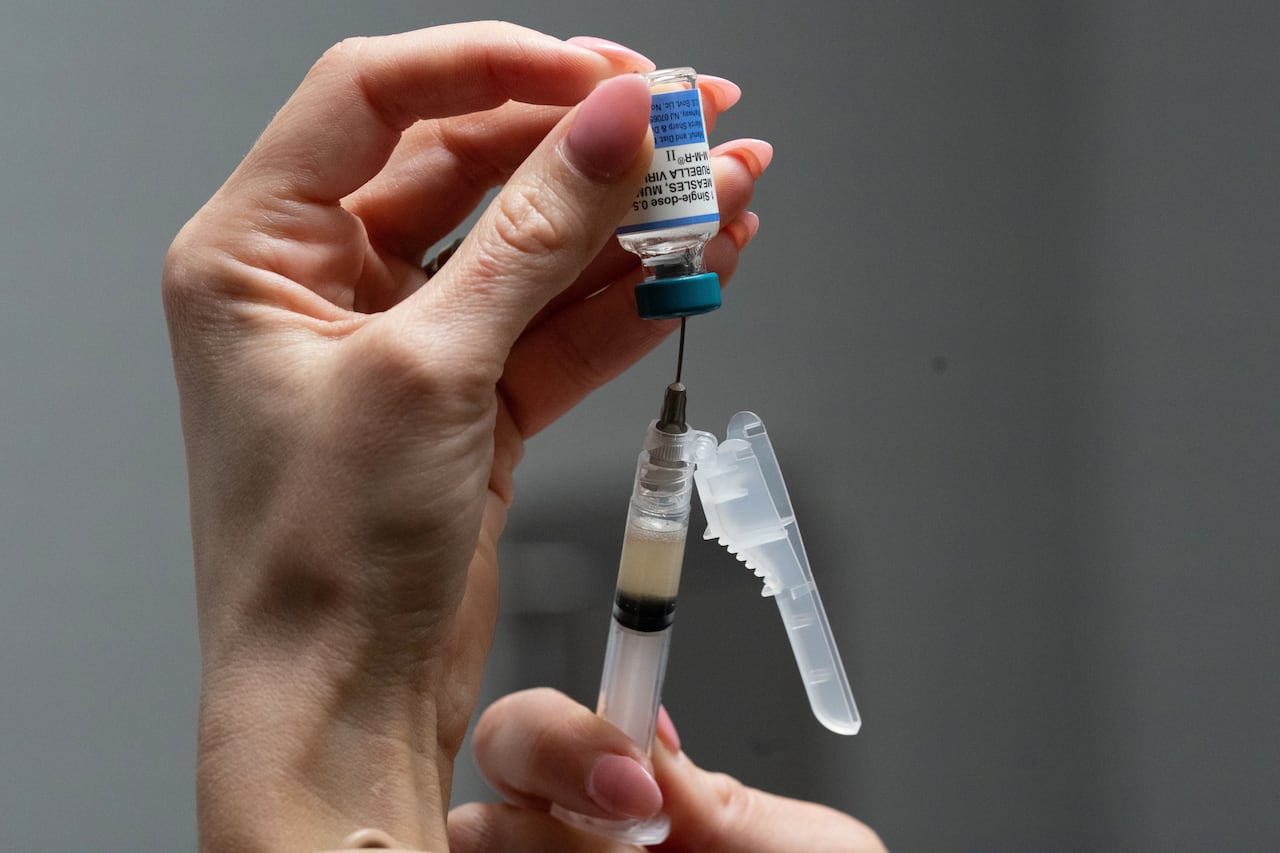
Although the province has broadened eligibility for the measles vaccine, experts indicate that Manitoba is still falling short of achieving herd immunity against the highly contagious virus. (Mary Conlon/The Associated Press)
“It’s always positive to see fewer cases; however, it might provide a false sense of security. We understand that it is a seasonal virus.”
Measles spreads through airborne droplets that can linger for hours following an infected individual’s cough, sneeze, or speech.
Transmission can escalate when winter conditions force people indoors, allowing the virus to circulate in confined spaces, Lagacé-Wiens explained.
“I wouldn’t be surprised to see another surge in 2027,” he added.
“As long as herd immunity is lacking, there will be small clusters of infections that may grow larger.”
Herd immunity
Lagacé-Wiens emphasized that at least 95 percent of the population in Manitoba must be immune to measles to eliminate the disease’s presence in the province.
However, Singh indicated that Manitoba is nowhere near that goal.
Current statistics reveal that approximately 81 percent of children had received their initial measles vaccination by the age of two in 2024.
Only around 72 percent of children up to the age of seven have received two doses of the vaccine.
“This results in significant groups of individuals who are vulnerable to infection,” Singh noted. “The outbreak was directly caused by a decline in vaccination rates.”
Singh is optimistic that the current outbreak will conclude, as the number of infections has led to greater immunity.
Nevertheless, if vaccination rates do not improve to establish herd immunity, new individuals remain at risk of contracting the virus, and it only takes one infected person to initiate another wave of cases.

A billboard displays a provincial campaign regarding measles in Winnipeg in May, part of the government’s efforts to halt the spread of infections in the province after more than a year of managing an outbreak. (Trevor Brine/CBC)
Nationwide, measles cases have also seen a decline in recent months. However, the number of infections in the United States has surged this year, already surpassing the records set in 2025.
Lagacé-Wiens pointed out that having a measles hotspot so near to Canada poses a significant threat, as it raises the risk of someone bringing measles into the country.
“As long as there is sufficient immunity around, the virus will die out, but it persists when there is a considerable unimmunized community. This is what led to the extended outbreak we experienced,” he stated.
To combat measles, Manitoba has expanded vaccine eligibility to infants as young as six months who reside in regions like Southern Health, the Prairie Mountain Health Region, and the Interlake-Eastern Regional Health Authority.
Health officials have also collaborated with educational institutions and family physicians to disseminate accurate information regarding immunizations.
The province has conducted advertising campaigns and even organized a telephone town hall to address questions about the disease.
Singh stated that efforts to build trust in vaccinations to boost immunization rates in Manitoba are ongoing.
“This is significant in numerous ways,” he noted.
Treating measles patients places a strain on healthcare resources, while also putting individuals who contract the disease at risk of complications, Singh explained.
At least 52 individuals have been hospitalized in Manitoba due to measles during the outbreak, including six who required intensive care.
“They could have been immunized, and nearly all infections would have been avoided,” Singh remarked.
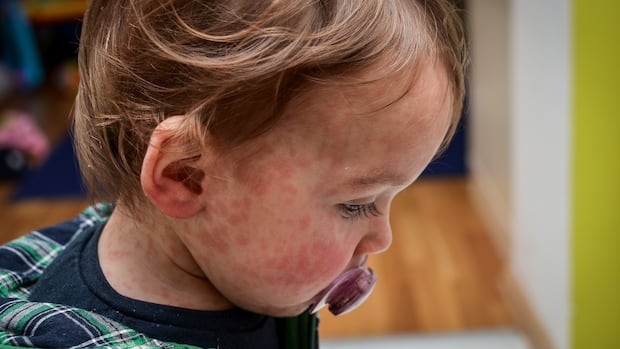
Measles infections have dropped to two confirmed cases in Manitoba in July, the lowest since March 2025. Experts caution that without herd immunity, measles cases are likely to rise again as the cooler months approach.
Tag: rewrite-pending

