
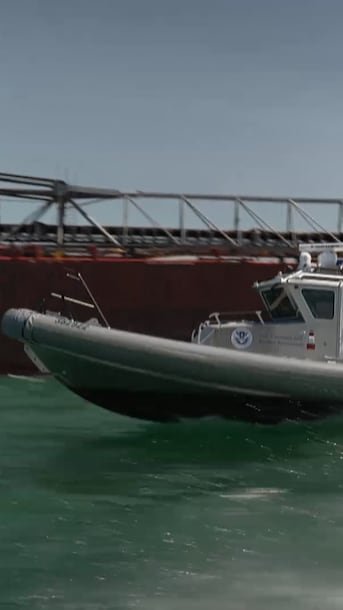
Decked in a black bulletproof vest, armed with a gun holstered at his side, Tim Thayer smoothly pushes down the throttles of four 350-horsepower engines — and the 18,000-pound U.S. Customs and Border Protection vessel roars to life on the Detroit River.
Thayer serves as a marine interdiction agent, part of a team that patrols the water boundaries of the Canada-U.S. border in this region.
His duty station is the Detroit sector, covering Michigan, Ohio, Indiana, and Illinois. The border shared with Canada in this area spans 1,388 kilometers of water, presenting a distinct challenge.
A unique feature of the geographical layout between the two nations is that Windsor, Ont., lies to the south of Detroit, separated by the river and linked by two bridges and a tunnel, with approximately seven million individuals crossing between them annually.
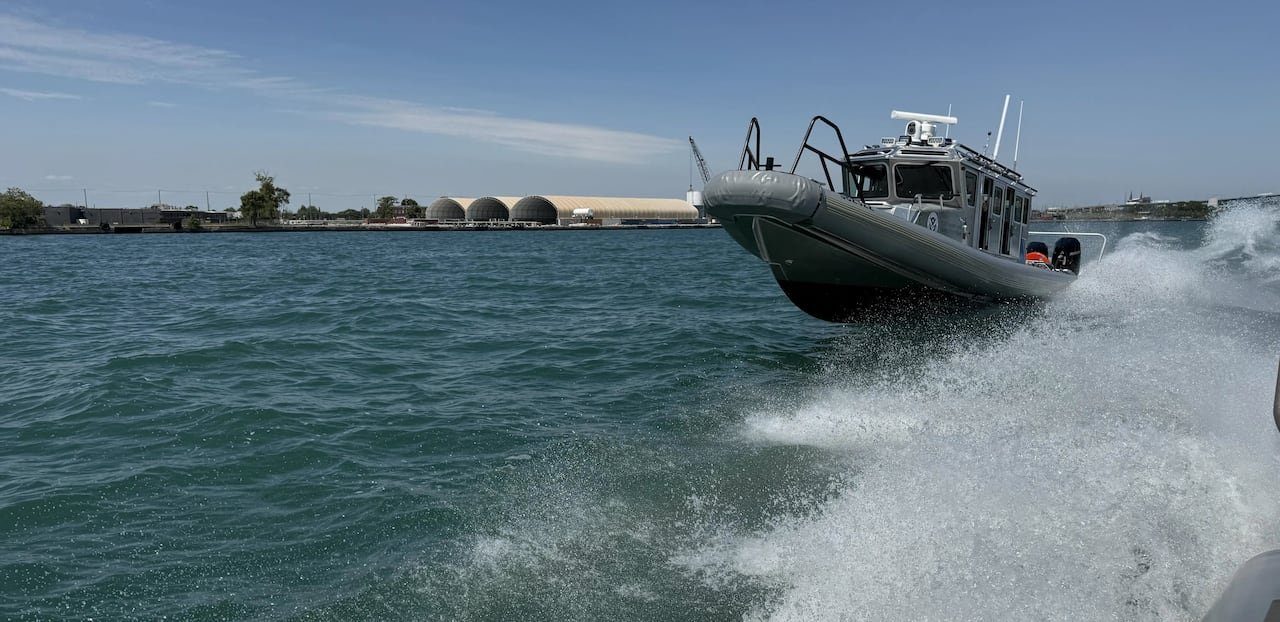
On a balmy Wednesday afternoon, Thayer peers southwards, gazing toward the Windsor shore, his eyes scanning for any anomalies.
“During our enforcement patrols on the Detroit River, we encounter individuals, illicit drugs, and firearms moving between the U.S. and Canada,” he stated.
During the Prohibition era of the 1920s and ’30s, the Windsor-Detroit passageway was a primary conduit for bootleggers smuggling alcohol from Canada into the U.S.
Although illegal activities on the Detroit River may not be as rampant today, the substantial presence of recreational boaters poses a challenge for law enforcement.
In 2025, U.S. President Donald Trump imposed tariffs on Canadian and Mexican imports, citing the fentanyl crisis as a reason. However, Canadian

